Noah Schmid · 25 September 2026
Tileno's Farming Community Confronts Early Frost Challenges Amid Shifting Seasonal Patterns
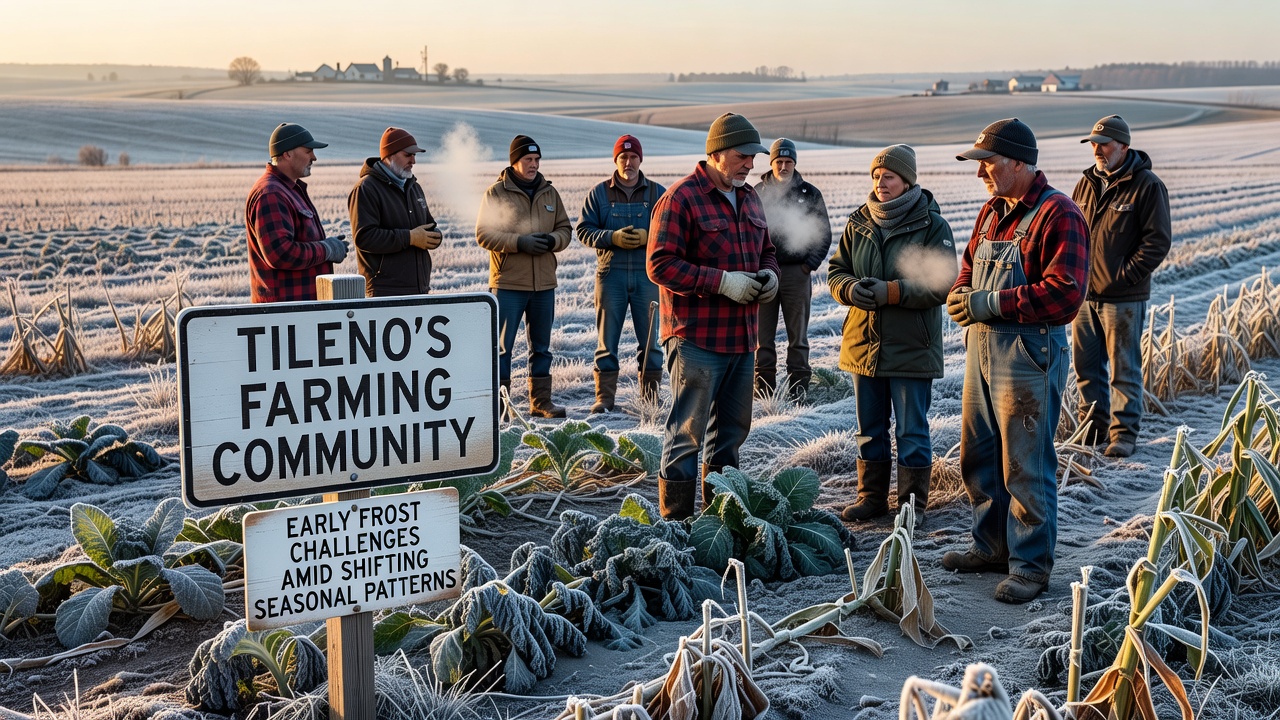
Farmers across the Tileno region have reported unseasonably early frost events that began affecting crops in late September 2026, and these incidents coincide with broader shifts in temperature and precipitation records tracked by local meteorological stations. Data collected from multiple monitoring sites shows average minimum temperatures dropping below freezing thresholds two to three weeks earlier than historical norms for the area, which disrupts standard harvest schedules for vegetables and grains grown in the valleys surrounding the main settlement.
Observed Weather Changes and Crop Impacts
Records from regional weather services indicate that September 2026 brought a series of cold fronts carrying Arctic air masses further south than typical for this latitude, and these fronts combined with clear night skies to accelerate radiative cooling on open fields. Local agricultural cooperatives documented damage to leafy greens, root vegetables, and late-season fruit orchards, with losses estimated in the range of fifteen to twenty percent for several key producers based on preliminary yield assessments conducted in the first week of October. Researchers at the nearby agricultural extension office have noted that soil moisture levels remained higher than usual entering the frost period, which amplified the severity of ice crystal formation within plant tissues and led to greater tissue rupture in sensitive varieties.
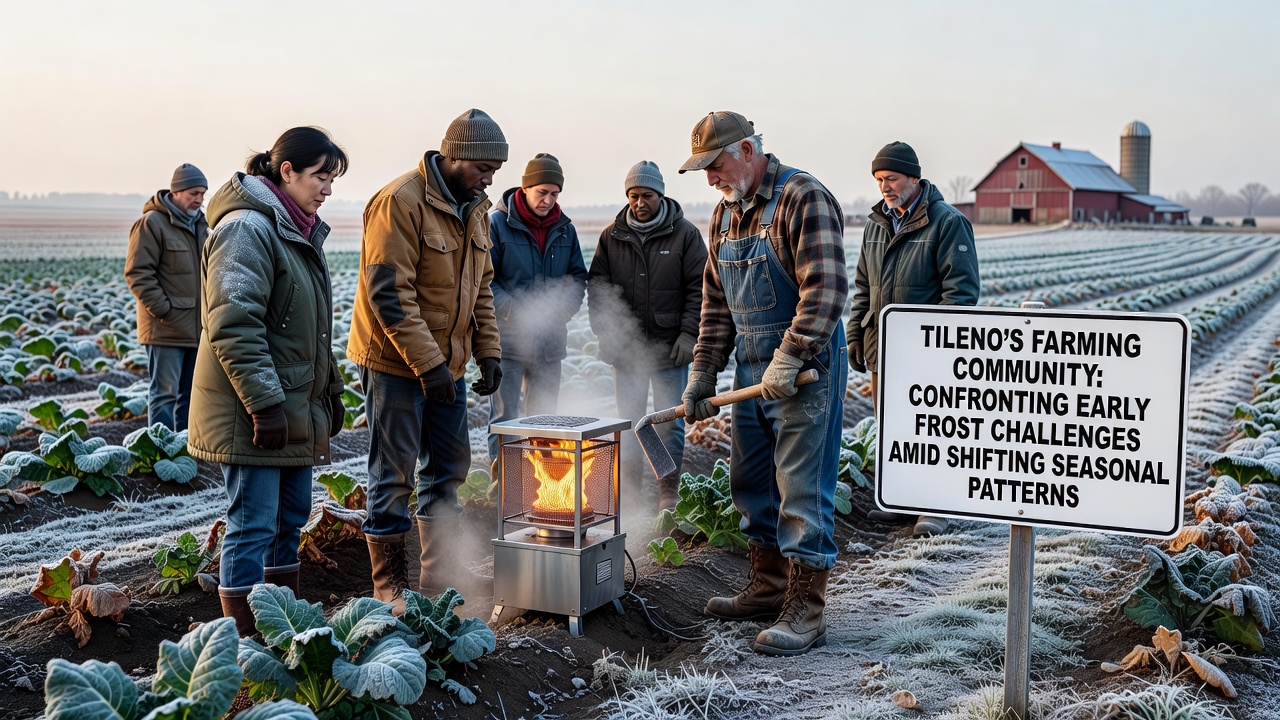
Community members organized emergency protective measures including row covers and portable heaters in the most vulnerable plots, while larger operations deployed wind machines that circulate warmer air layers to prevent frost settling on crop canopies. These interventions proved effective on roughly sixty percent of treated acreage according to follow-up surveys, although smaller family farms without access to such equipment experienced higher rates of total loss in exposed sections. Historical climate data compiled over the past three decades reveals a gradual advance in the average date of first frost by approximately one week per decade, and this trend aligns with patterns documented in comparable mid-latitude agricultural zones elsewhere in southern Europe.
Adaptation Strategies and Regional Responses
Agricultural advisors have begun recommending adjustments to planting calendars and the selection of frost-hardier cultivars for future seasons, and several Tileno cooperatives have already placed orders for seed varieties developed through breeding programs at institutions in northern Italy and southern France. Field trials conducted on experimental plots during the 2025 growing cycle demonstrated that certain hybrid strains of cabbage and carrots maintained viability after exposure to temperatures as low as minus four degrees Celsius, whereas traditional local varieties suffered extensive damage under identical conditions. Extension services are distributing these trial results to growers through monthly workshops that also cover soil management techniques designed to improve thermal retention during nighttime temperature drops.
Insurance providers operating in the region have expanded coverage options to include early frost events as a standard peril, and enrollment among Tileno producers increased by twenty-five percent compared with the previous policy year. Government agricultural support programs have allocated additional funds for infrastructure improvements such as improved drainage systems that reduce standing water and thereby limit frost persistence, while subsidies for protective equipment are under review by regional authorities. Observers note that similar adaptation measures have been implemented successfully in parts of Canada and Australia where shifting seasonal boundaries have likewise compressed growing windows for temperate crops.
Longer-Term Patterns and Supporting Research
Analysis of temperature records maintained by the European Environment Agency shows a measurable increase in the frequency of anomalous cold outbreaks during transitional seasons across the Mediterranean basin, and these events occur alongside overall warming trends that extend the frost-free period later into autumn in some years while advancing it earlier in others. A collaborative study involving researchers from the University of Melbourne and the European Commission's Joint Research Centre examined comparable frost episodes in analogous agricultural regions and found that integrated early-warning systems based on satellite temperature mapping can provide up to seventy-two hours of advance notice, allowing farmers additional time to deploy protective measures. Tileno's local authorities have begun integrating these modeling tools into public alert protocols that distribute SMS notifications to registered growers when frost risk indices exceed defined thresholds.
Continued monitoring through the remainder of the 2026-2027 winter season will help clarify whether the September frost events represent an isolated anomaly or part of an accelerating pattern, and the resulting datasets will feed into updated regional climate projections used for planning purposes. Cooperative leaders continue to share real-time observations through digital platforms that aggregate field reports and satellite imagery, creating a shared knowledge base that supports collective decision-making on planting and protection strategies.
Conclusion
The combination of documented temperature shifts and on-the-ground responses in Tileno illustrates how agricultural communities adjust practices when seasonal boundaries move, and ongoing data collection from multiple sources will determine the effectiveness of current adaptations over subsequent growing cycles. Regional authorities and research partners maintain active surveillance of weather developments to refine guidance for producers facing similar conditions in the coming years.